18min read
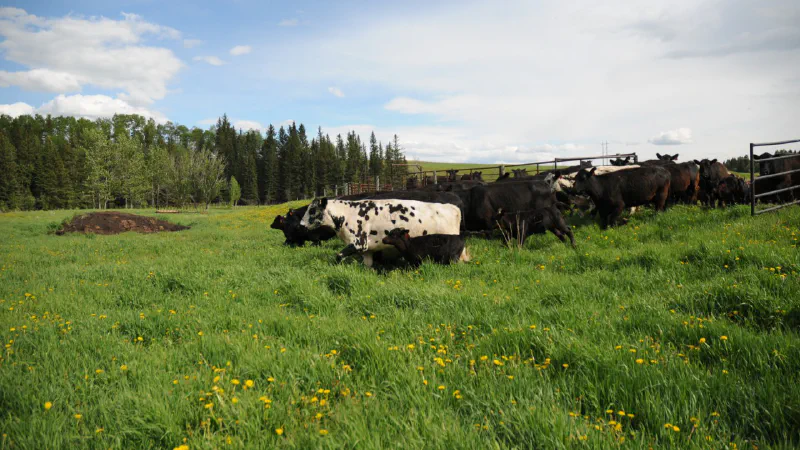
On 2026-01-08 a petition was launched at change.org soliciting signatures to “Stop the new regulations for CFIA traceability”. As of 2026-03-10 the petition had 29,000 signatures.
In response Alberta Minister of Agriculture RJ Sigurdson issued a statement “asking the Canadian Food Inspection Agency (CFIA) to take the necessary time to ensure the proposed changes are understood and allow concerns to be heard.” and the Alberta Beef Producers (ABP) issued a statement “recommending that the Canadian Food Inspection Agency (CFIA) halt the finalization of the upcoming federal traceability regulation changes”, and the Canadian Cattle Identification Agency (CCIA) provided this post.
In response, the Canadian Food Inspection Agency issued a statement that “The CFIA will pause any publication of the regulations until the proposed changes are more widely understood and concerns are heard and taken into consideration.”
On 2026-03-02, Alberta Beef Producers held a “Producer Town Hall on Traceabilty” in Calgary.
Four Alberta ranching families launched Flokk Systems in 2020 because we saw opportunity in closing the gap between the requirement for livestock animal movement reporting (“imminent” in summer 2020, yet still “imminent” in January 2026) with the constrained technology and communication infrastructure and support available to ranching families.
To ensure Flokk was prepared for capitalization and success, Flokk:
Flokk is uniquely positioned to understand this challenge and advance independent, entrepreneurial and actionable solutions.
In his statement Minister Sigurdson wrote:
" I have been in direct contact with the federal Minister of Agriculture and Agri-Food, Heath MacDonald, to share Alberta’s concerns and to reinforce the importance of collaboration with provinces and industry before moving forward with any amendments."
Minister Sigurdson’s initiative is appreciated. But Minister of Health Canada Marjorie Michel is accountable for this file, not AAFC Minister MacDonald. The CFIA reports to Health Canada, not AAFC.
This is not ignorance of the part of Minister Sigurdson; Minister MacDonald has accepted accountability for traceability and AAFC is engaged with the traceability file. Yet Minister’s MacDonald capacity to influence adoption of the regulation is limited because the file is not theirs.
In Flokk’s paper “There is compelling opportunity in digitizing Canadian cow/calf ranching.”, we wrote:
" Canadian ranchers face classic Canadian impediments to productivity; uncoordinated requirements and processes administered by multiple institutions, designed first for institutional convenience without regard to collective impact to the entrepreneur.
The outcome? These institutions, initiatives, and expenditures will all, understandably, continue to be ignored by most cow/calf ranching families because from their perspective it is un-engaging and un-actionable chaos."
The result is more than thirty six entities, many holding authority but taking no accountability, many with accountability but having no authority or resources, and many offering neither, all claiming to be legitimate stakeholder.
From the ranchers perspective livestock traceability entails their producer association advocating for something different from the national industry association while a Minister of Agriculture argues, in the same statement, the urgent need for traceability and the need to delay traceability while PID’s are administered in isolation from every other process while Federal minister for AAFC MacDonald holds accountability but no authority while Federal Minister of Health Michel holds authority but refuses any accountability, deferring to the CFIA, who defers to the CCIA, who holds neither resources nor incentive to constructively engage ranchers to realize traceability.
This failing was confirmed at the March 2 ABP Town Hall when it was identified, and discussed, that uncoordinated demands for data being imposed on ranchers (e.g. traceability (CCIA), livestock movement and sale (LIS), income stability programs (AgriStability), and sustainability (CRSB)) is already unmanageable, constraining the adoption of productivity solutions, and will only get worse.
Given these circumstances, Canada’s ranchers are to be commended for their restraint.
The primary organization engaging ranchers on traceabilty is the CCIA. However the CCIA:
The outcome was predictable; with no single individual accountable and no resources assigned there has not been, and never will be, progress realizing improved livestock animal traceability.
Action item 1: Lock Marjorie Michel, Heath Macdonald, the provincial Ministers of Agriculture, Andrea Brocklebank, Kevin Boon, Brad Dubeau, Christina Patterson - Betker, Carson Callum, Richard Horne and Steve Harrison in a hotel until they identify a single entity accountable for, and holding resources necessary to, comprehensively set, realize and sustain mandatory data reporting requirements for Canadian ranchers.
This accountability must be comprehensive, i.e. not just addressing traceability. Canada’s ranchers, and companies seeking to support them, need a single authoritative entity to define and realize all mandatory data reporting requirements of Canadian ranchers.
Flokk’s recommendation is collaborative standards; ranchers must take ownership of the industry’s practices just as any profession does. Time to pull this calf ourselves: Canada’s livestock industry must find our own path to traceability
Numerous recent reports have identified comprehensive deficiencies in innovation policy and outcomes, and lagging digitization, in Canadian ranching and rural communities:
Digitized Canadian ranches could trivially report current, reliable and immutable livestock animal movement while disclosing personal information only when necessary.
But addressed in isolation, without affordable and universal connectivity, limited and obsolete digital solutions, no affordable or ready access to technical support, and a responsible regulator (CCIA) sustaining obsolete processes and technology, animal movement reporting becomes a significant burden providing no return
With herd digitization, traceability comes free with returns realized from digitizing sustainability and productivity. Traceability without herd digitization is, as Ms Fairbrother identified, a pain in the ass.
Action item 2: Review, consolidate, and act, on identified deficiencies in Canadian AgTech innovation and mobilize a national initiative to realize digitization of Canadian ranching.
Canada’s current livestock animal movement and location repository, the Canadian Livestock Tracking System (CLTS) is entirely obsolete.
On May 1, 2000 Selective Availability was permanently disabled for the GPS satellite constellation. The result was Canadian innovators applying geopositioning to deliver precision planting, spraying, and harvesting to Canadian farmers.
Had GPS been available a few months before launch of the Canadian Livestock Tracking System (CLTS) in January 2000 Canadian livestock animal traceability could, and should, have been done very differently.
But due to CCIA complacency, a quarter century later in 2026 we face the bizarre situation of Canadian ranchers being mandated to submit spacial data to a spacial data repository that does not not use spacial data coordinates.
That after quarter century the CCIA continues to deny to Canadian ranchers the cost and convenience of GPS is proof of CCIA complacency sufficient to disqualify them continuing as a responsible administrator.
With GPS unavailable when the CLTS was being designed, the CCIA created the “Premises Identity” (PID), a unique identification number for a specific location. However PID’s are no longer required to track animal movement; latitude, longitude, and time can be accurately and affordably acquired via GPS without administrative overhead or disclosure of personally identifying information.
This is how the US livestock animal traceability operates. From “Where Food Comes From and U.S. CattleTrace: Strengthening Traceability for a Safer and Stronger U.S. Cattle Industry”:
Protecting Producer Data and Independence
U.S. CattleTrace was designed with producer trust as a core principle.
Only four data points are collected;
Animal ID
Date
Time
Geo-coordinatesat the time of a sighting
No personally identifiable information is stored. Data is accessed only during a confirmed disease outbreak and only by authorized animal health officials.
The US system does not bother with the complexity and burden of movement events. They simply report the presence of an animal at a location; movements are derived from these reports
PID’s are also used as producer identities. Dual purpose makes then ineffective at both applications. Every Canadian jurisdiction has authoritative citizen identity management (e.g. Alberta’s Alberta.ca account) and these should be used for rancher identities.
Currently a PID is submitted with every animal movement event. As a PID can be associated with an individual, this is an unnecessary disclosure of personally identifying information.
There are multiple options to resolve this issue:
PID’s are an ugly hack poorly serving two functions; owner identification and animal location identification, making them insufficient at both. PID’s have not been actively maintained and are often wildly inaccurate. PID’s are so obsolete, incomplete, unreliable, and inaccurate that abandoning them for a modern solution would be less costly and more effective than the effort necessary to restore them to usability.
For animal side data collection the CCIA:
Provision and research of digital traceability solutions is neither in the CCIA’s mandate nor are they competent at it.
The necessity for the CCIA to manage issuance of CCIA RFID tag numbers could be eliminated entirely by migrating to Universally Unique IDentifiers. Alternately issuer identities, independent from specific animal identifies, could be used as is is done when creating SSID and MAC addresses.
The CLTS operates entirely stand alone, and the CCIA actively resists participation with partners. Animal ownership is authoritatively asserted for livestock transport and manifests; this should be sufficient for traceability purposes.
I have personally observed an undocumented and unsolvable error during demonstration of the CLTS by a CCIA staff member.
If after a quarter century CCIA staff still cannot reliably get the CLTS to work, why are Canada’s ranchers being forced to use the CLTS?
AI enabled reviews of the integrity of an animals movement history, mandatory at slaughter, optional under other circumstances, would assure food safety far more effectively that current manual practices.
than the CLTS does. But these outcomes cannot be realized while the CFIA and CLTS sustain single outcome processes and technologies solely serving entrenched institutions and personnel.
Flokk’s recommendation that Canada’s AgTech innovation ecosystem be mobilized to deliver innovative, affordable, and effective traceability solutions was publicly affirmed by Deputy Minister Jason Hale at the ABP Town Hall on Traceability, where he committed to engaging Alberta Technology and Innovation on behalf of Alberta’s ranchers.
Action item 3: Mobilize Canadian AgTech innovators to collaborate with a single entity holding accountability for reporting practices required of Canadian ranchers to deliver innovative solutions providing significant and sustained competitive advantage for the Canadian beef industry.
Evan Solomon, Canada’s Minister of AI and Digital Innovation, is directing expenditure of more than half a billion dollars on a Pan-Canadian Artificial Intelligence Strategy that “bridges Canada’s world-class talent and research capacity with programs to enable commercialization and adoption to help ensure that Canadian ideas and knowledge are mobilized and commercialized here at home.”
Canada’s ranchers are being mandated, under threat of financial penalty, to use a CLTS already obsolete when commissioned a quarter century ago. Rural Canadian founders seeking to provide effective and affordable solutions to Canada’s ranchers are denied any resources.
Ms. Fairbrother’s petition did not become necessary because of complacency and unresponsiveness on the part of the CFIA and CCIA. The current situation is the inevitable outcome of rural Canadian issues and residents being neglected and denied resources.
An innovative, and ambitious, response is required.
Come join us!


© 2026 Flokk Systems Inc. All rights reserved.