8min read

On 2026-06-15, Flokk sent the following letter to Alberta Minister of Agriculture and Irrigation Tara Sawyer:
Subject: Moving forward on livestock animal traceability
From: Mark Olson
Date: 2026-06-15, 07:46
CC: Jason Hale, Dale Johnston, OldsDidsbury.ThreeHills@assembly.ab.ca, Lacombe.Ponoka@assembly.ab.ca
Minister Sawyer:
Congratulations on your appointment as Alberta Minister of Agriculture and Irrigation.
This was a possibility I anticipated, and saw as desirable, when you secured the UCP nomination for Olds-Didsbury-Three Hills last year, and I am pleased it has occurred.
As you know from our meeting last September, which included Flokk’s founding investor Dale Johnston retired MP for Westaskiwin, Flokk Systems is an Alberta AgTech startup founded by four ranching families, three of them living in your Olds-Didsbury-Three Hills constituency, that have invested significant amounts of our funds and sweat equity to develop and prove a practical, and affordable, solution digitizing traceability, sustainability, and productivity of cow/calf herds, with a particular focus on the needs of family scale commercial herds.
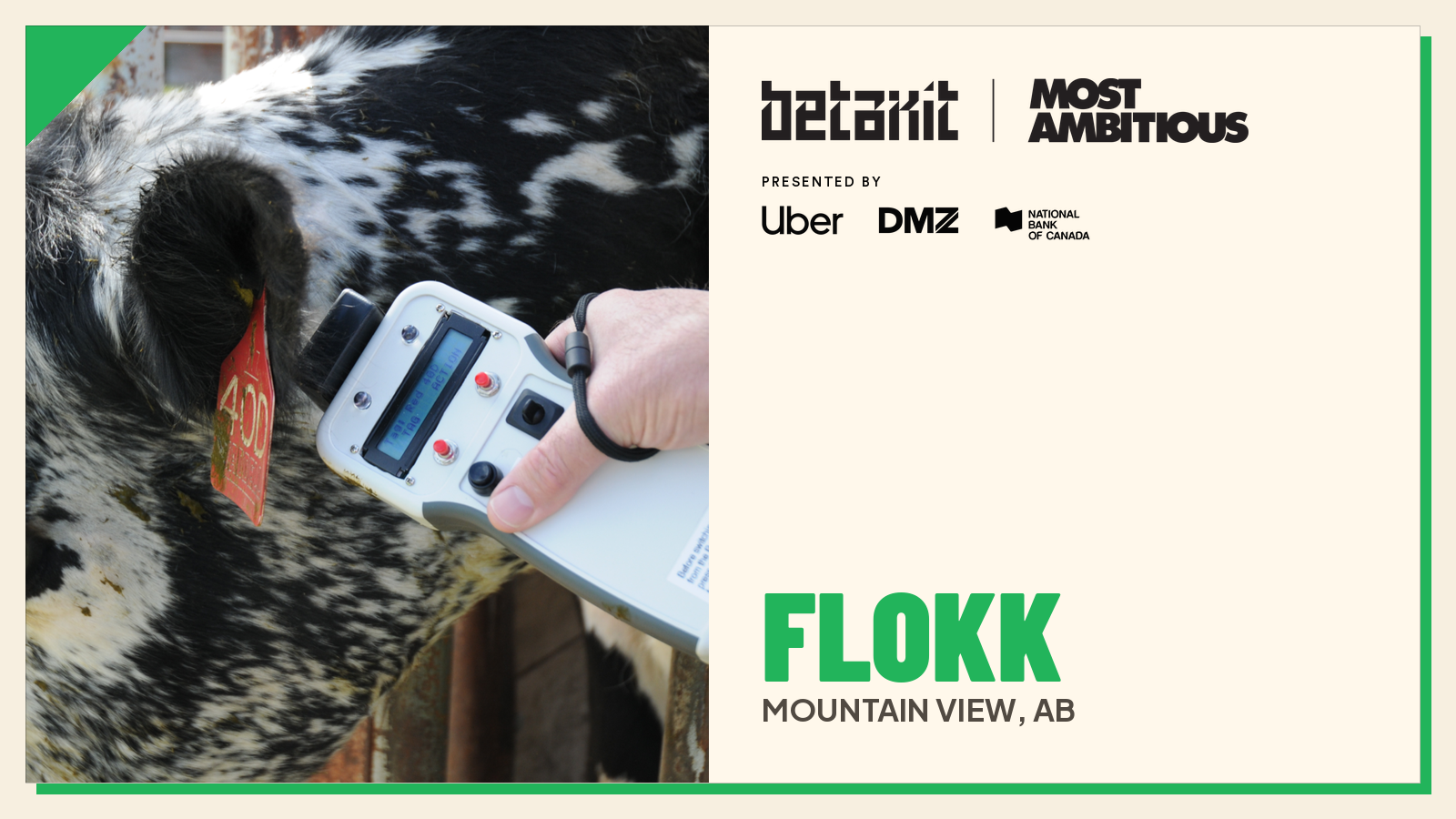
Flokk is a Betakit Most Ambitious honouree, and was selected second most investable startup at DiscoverLab@AgSmart.
Since we met last September, resolution of critical deficiencies in Canadian livestock animal traceability have again been delayed.
Quoting your predecessor, R J Sigurdson:
Traceability is essential in ensuring Alberta continues as a strong player in international markets, which is especially important right now. Alberta’s livestock industry has been a leader in traceability for decades and our producers have been dedicated to the system acknowledging its importance to food safety and foreign animal disease preparedness.
I think that the traceability changes, the enhancements to our existing system are necessary incremental changes that would put us in a much better position to deal with a animal disease issue or a food safety issue.
Alberta Beef Producers in CFIA updates livestock traceability regulation direction:
Traceability remains an important tool for supporting disease preparedness, emergency response, market access and confidence in Canadian beef. At the same time, traceability systems need to be science-based and practical, ensuring they don’t create unnecessary burdens in day-to-day operations. ABP is committed to finding a path forward that works for cattle producers across the value chain, from cow-calf through to finishing.
From the Canadian Cattle Association CCA Statement on Proposed Federal Livestock Traceability Regulations:
Canada’s traceability system is a critical component of current and future global trade agreements. The goal of the system is to enhance disease preparedness while minimizing the impact on affected producers. The system requires regular review and periodic updates.
Canada exports over 40% of our beef cattle production every year. Traceability is a valuable asset when negotiating ongoing trade agreements. Our reliance on export markets is much different than other countries such as the U.S.A. The faster a disease investigation can be fully investigated, the faster regular trade (exports) with other countries will resume. BSE illustrated what lack of exports can do to the industry.
Dr. Sylvain Charlebois in “The Problem Isn’t AI. It’s Data.”:
Traceability is another missed opportunity. While countries around the world are investing heavily in digital food traceability systems, Canada remains a patchwork of disconnected databases and reporting systems. In an era when consumers increasingly demand transparency about food origin, sustainability, and safety, this fragmented approach limits both competitiveness and innovation.
In the “Global marketing” key item in the RBC Thought Leadership piece “Food first: How agriculture can lead a new era for Canadian exports”:
In a similar vein, gaining market share requires robust inspection and control services that ensure food safety and agriculture production’s protection against new diseases and pests. Canada has a strong reputation, but also must come to grips with a dilemma: even though we allocate 40% of that agriculture support services budget to inspection and control, we still face market access issues and duplicative inspections. One approach would be to pick the top five products for export potential and develop priority market assessments, such as Europe for seafood. Pooling public-private resources, the federal government could work with industry associations, companies, and provinces in region-specific, agile taskforces to promote exports and inform regulatory bodies on what’s needed to support growth. A complementary option: position regulatory bodies such as the Canadian Food Inspection Agency to proactively develop standards recognition and harmonization in the identified growth markets."
From the Western Producer item Producers discuss traceability concerns, reporting from a webinar organized by the Saskatchewan Cattle Association:
Informal polls conducted during the session found that 60 per cent of respondents believed Canada is adequately prepared for a disease outbreak. About 70 per cent believed traceability is a critical component of disease preparedness.
Asked what the biggest challenges with traceability were, 36 per cent said tag retention, while 18 per cent said other more advanced technology or other reasons. Eleven per cent cited practical reporting software, four per cent said rural connectivity, and 13 per cent said they didn’t have challenges."
Flokk’s synopsis of the situation:
Flokk is encouraged by your participation Minister Sawyer in the round table “Shaping Canada’s Digital Agricultural Policy Framework: Alberta’s Priorities for Adoption, Data, and Reform”. We appreciate that your are maintaining the active and significant support for digitization of Alberta’s ranches that your predecessor did, reflected by AAI’s $1.2M investment in 2024 in the Alberta Digitalization Agriculture Program.
Flokk, obviously, concurs with you that digitization of ranching is a necessary outcome.
We are eager to take up the generous offer by Deputy Minister Jason Hale, made 2026-03-02 at the Producer Town Hall on Traceability organized by the Alberta Beef Producers, to mobilize Alberta Technology and Innovation to secure innovative solutions for practical and affordable livestock animal traceability.
We reach out to you today to ask for your advice and support securing the resources that four Alberta ranching families, three of them your constituents, require to take our critically required innovation, proven on 10 Alberta ranches and demonstrated to thousands of Ranchers (many of which indicated interest to acquire our practical and affordable solution) to market.
As rural Alberta innovators seeking to serve the needs of Alberta’s and Canada’s ranchers we have found the challenges of distance, constrained access to decision makers and capital providers, and an agriculture innovation ecosystem designed, and biased, to academic exploration rather than enabling Ranchers to serve Ranchers, insurmountable. This is particularly true of our attempts to engage Federal actors and resources. We trust, as a rural Albertan with significant experience as a leader in agriculture you can offer insights, and introductions, that will enable Flokk to overcome these limitations.
Dale and I would appreciate the opportunity to meet with you again, answer any questions you may have, and take you up on the offer you made 2026-06-13 to “continuing to work with producers, researchers and industry partners to support a strong future for Alberta agriculture” by advancing digitization of agriculture that helps Alberta producers improve productivity, strengthen sustainability and remain competitive.
thank you,
Mark Olson
President, Flokk Systems
Come join us!


© 2026 Flokk Systems Inc. All rights reserved.