3min read
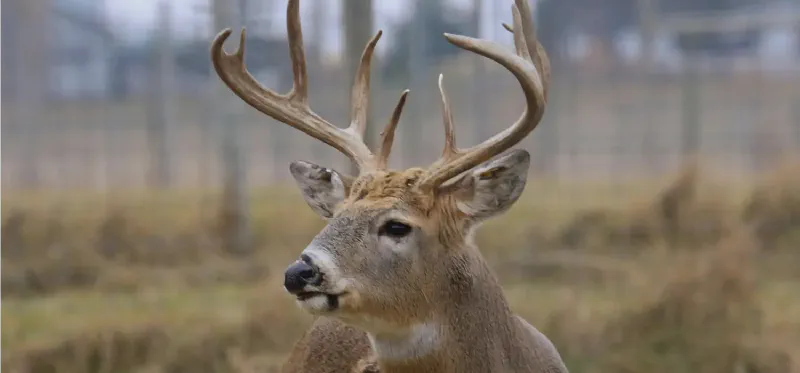
Among others reasons why Canada must urgently move forward securing universal and authoritative livestock animal traceability, the increased prevalence of Chronic Wasting Disease (CWD) among deer has been raised as a theoretical risk due to increased exposure of cattle to variants of the prion causing CWD.
Research findings from the University of Calgary establish this is not a theoretical risk; it is a proven one.
One interpretation of these findings is that CWD prions retain infectivity across species and that primate infection may manifest atypically while still enabling transmission. Our results challenge earlier conclusions that minimize the zoonotic risk of CWD and underscore the need for continued surveillance.
The research proves a mechanism for emergence in Alberta of a BSE scale risk to human health from exposure of cattle to shed CWD prions. Since elimination of the source is impossible, over long enough a time frame this emergence is inevitable.
So in addition to:
We must add inevitable and repeated animal health incidents presenting risk to human health caused by increasing exposure of cattle to CWD prion variants.
The Canadian BSE crises was traced to a specific practice, elimination of which secured proof risk to human health had been eliminated.
Deer are endemic to Alberta. It is impossible to vaccinate for prion initiated disease. The only mitigation is rapid acquisition of irrefutable proof that the diseased animal, its products, and animals exposed to the prion have been identified, located, and resolved. Proof Canada currently could not secure.
The Canadian Cattle Association task force on traceability is working to a 20 month time frame. This is unacceptable. While the fundamental philosophy of the task force is sound; industry leadership securing and sustaining traceability, the task force:
Flokk Systems offers the necessary producer solution and strategy to resolve this critical deficiency, and risk to Canada’s beef industry, next year, not next decade.
Come join us!


© 2026 Flokk Systems Inc. All rights reserved.